
What Is Diethylene Glycol and Why Is It Used?
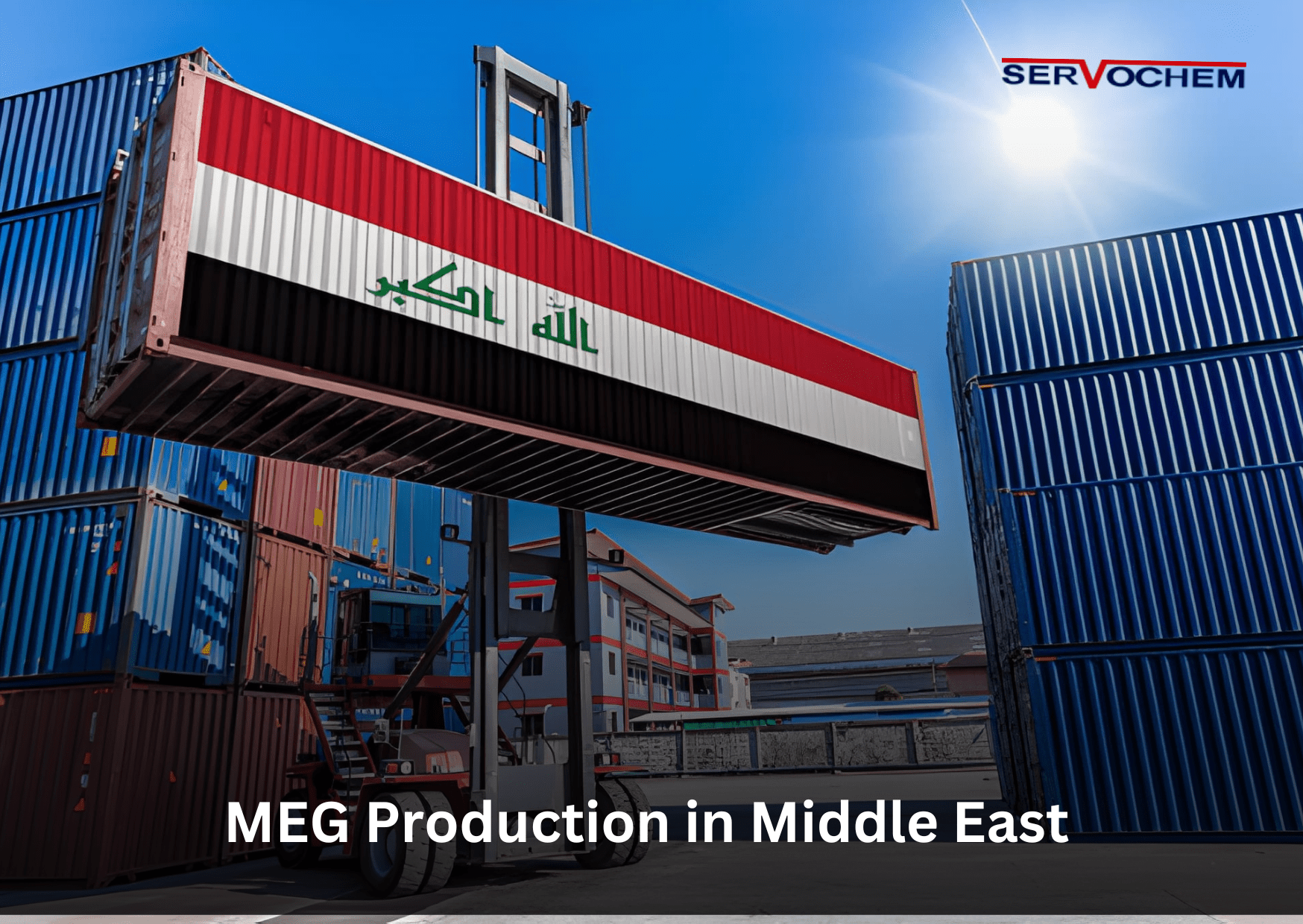
MEG Production in Middle East
Welcome to the Servochem LLC informative article page. This article discusses the differences seen between MEG and DEG. These days, in the petrochemical industry, which keeps changing, knowing certain differences in a MEG compared to a DEG (Mono Ethylene Glycol with Diethylene Glycol) has become important for those manufacturers in sectors like packaging, automotive production, textile, and building. Getting into the year 2025, business companies keep working on making their supply chains better and choosing the materials that aim to lower expenses and make them work quickly. By understanding MEG versus DEG, a strategic benefit can be gained.
Servochem LLC has 40+ many years in supplying and sending out chemical intermediates to companies around the world. Good market information about the glycols and also feedstock, plus having connections in export logistics. The reputation comes from having open operations, always having consistent quality, and providing trustworthy trading options.
Strategic Drivers Behind MEG Production in Middle East
Servochem LLC presents reasons for which the Middle East has turned into an important place in the world for MEG production and exports. The area’s main power comes from steady feedstock access, a petrochemical industry that is integrated together, and the region has a strong ability for logistics in the global market. These things all together make companies in the Middle East have both higher supply-chain and cost advantages if you compare to other areas.
- Abundant Feedstock & Vertical Integration
- Diversification Beyond Oil
- Global Logistics & Export Advantage
Middle Eastern producers is benefited from having low-cost ethane source and vertical ethylene-glycol facilities in countries like Saudi Arabia, Oman, and Qatar. This makes fluctuation of supply gets lower and allows more stability and efficient cost of MEG production. Same time, economic regions have expansions further than crude oil leading to higher valued petrochemicals, which strengthens fields like polyester manufacturing, plastics, or artificial fibers industries. Due to being close with large Asian market along with availability towards important harbors like Jubail and Jebel Ali, Middle East gets faster transport, more flexible channels, also dependable export achievements in spite of commodity cycles that are volatile.
Economic and Industrial Impact
The wave of actions from the MEG Production happening in the Middle East goes much further beyond just chemical works. Its whole community has impacts on industries needing polyester, resins, and PET resins.
Downstream Manufacturing Growth
- Textiles: With polyester fibers that are made from MEG, they make up an important part of both the local and worldwide textile systems.
- Packaging: When it comes to PET bottles and other packages, pushed by fast-moving consumer goods and beverage companies, they need the glycol to be always ready.
- Automotive: Coolants and lubricants made with MEG give high engine performance and also help prevent rust.
- Construction: Paints floors and different insulation items using glycol materials make structures more strong, facing extreme temperatures. So, the Middle East is moving ahead as not just supplying the materials but tying together the value chain with several different industrial areas.
These downstream linkages position the Middle East not only as a raw-material supplier but as a value-chain integrator across multiple industrial domains.
Technology, Efficiency, and Sustainability
MEG factories that are new in the region use advanced process technologies like Shell Omeg, Dow METEOR, and also Scientific Design ways. Major focus is given to optimising energy and minimising carbon emissions. That is how they match worldwide decarbonization goals.
Process Innovations
- Catalyst Efficiency: Continuous reactor setups help achieve better selectivity, and unwanted by-products are less.
- Energy Combination: If the heat-recovery systems are implemented, fuel is consumed less by around 15 to 25 percent.
- Reuse of Water: Modern condensate recovery tools make using freshwater less necessary, so the sustainability goals are tackled.
Such upgrades maintain the Middle East’s MEG Production globally as more reliable, eco-adaptive, and efficient. They kind of show the commitment of industries in this field.
The Dynamics of MEG Market and Exports
There is a nature of cycles within the MEG market, which are driven mostly by how much the feedstock costs, worldwide demand movements, and the use of polyester. But in the Middle East, their connected community helps producers handle these market changes.
MEG exports going from this region keep increasing, thanks to those continuous offtake agreements with buyers in Europe and Asia. Experts have guesses for 2024 to 2025, indicating that the Middle East might cover nearly 45 percent of global MEG capacity, highlighting its leading supply chain role.
Servochem LLC — Partnering in the MEG Value Chain
Servochem LLC considers the MEG sector as more than only a segment in trading; it is a community for value, and each molecule brings growth to the industry. We have knowledge in sourcing chemicals, distribution, plus logistics, providing downstream producers working in areas such as textiles, packaging, construction, or automobiles with a regular supply and also technical stability.
For seeing detailed information about our products, you may check the Mono Ethylene Glycol page, which lists specifications, purity levels, and industrial usage.
MEG Production in Middle East : Frequently Asked Questions (FAQs)
What drives the rapid growth of MEG production in the Middle East?
The region’s MEG growth is powered by abundant natural gas reserves, integrated petrochemical clusters, and cost-efficient ethylene feedstock. Nations like Saudi Arabia and Qatar leverage vertical integration to maintain consistent production margins and global export competitiveness.
Why is Mono Ethylene Glycol essential for downstream industries?
Mono Ethylene Glycol (MEG) is a critical intermediate used in polyester fibers, PET packaging, automotive coolants, and construction resins. Its versatility connects multiple B2B sectors, enabling the manufacturing of textiles, bottles, films, and coatings that define modern industrial infrastructure.
Supplying Mono ethylene glycol to countries
We Export Mono ethylene glycol to Saudi Arabia, Iran, Iraq, United Arab Emirates, Qatar, Bahrain, Oman, Kuwait, Turkey, Egypt, Yemen, Syria, Israel, Jordan, Cyprus, Singapore, Malaysia, Indonesia, Thailand, Vietnam, South Korea, Japan, Sri Lanka, Maldives, Bangladesh, Mayanmar, Taiwan, Cambodia, Argentina, Bolivia, Brazil, Chile, Venezuela, Colombia, Ecuador, Guyana, Paraguay, Uruguay, United States of America, Canada, Mexico, Panama, Costa Rica, Puerto Rica, Trinidad And Tobago, Jamaica, Bahamas, Denmark, Russia, Norway, Germany, France, Italy, United Kingdom, Spain, Ukraine, Netherland, Belgium, Greece, Czech Republic, Portugal, Hungary, Albania, Austria, Switzerland, Slovakia, Finland, Ireland, Croatia, Slovenia, Malta, Nigeria, Algeria, Angola, South Africa, Libya, Egypt, Sudan, Equatorial Guinea, The Republic Of Congo, Gabon, Europe, Africa, Asia, North America, South America, Middle East, Far East Etc.
Servochem LLC, is a well known worldwide exporter of Chemical products, is committed to providing each and every customer with the highest standard of customer service. We deal in Mono ethylene glycol worldwide, offering a wide range of chemical products.
Similar post: Mono Ethylene Glycol (MEG) Supplier
Internal Links: Mono ethylene glycol
External Links: Ethylene glycol